
Skip to Main Content

How to detect scams and prevent fraud

Protect your finances and information from fraudsters.

Learn more
Desert Financial will never ask for your username, password or verification code in a text, email or phone call.
When in doubt, hang up the phone and call us at (602) 433-7000.

Types of fraud you should know about

New message: Take a second look at the second level of protection

We only send multi-factor authentication codes to verify your identity. We will not request personal information in a text message. Attackers may text you from local area codes with links similar to ours. What should you do if you receive a fraudulent text?
Don’t click on any links within the text.
Call us at (602) 433-7000
Send a copy to emailfraud@desertfinancial.com

If Desert Financial ever texts you a multi-factor authentication code, it’s important you don’t share it with anyone. Fraudsters could use it to try to access your accounts.

The Federal Trade Commission has reported a recent surge in fraud from phishing.

Phishing occurs when a scammer calls you or sends you a text or an email that looks like it’s from a legitimate source, asking you to click on a link, download an attachment or provide sensitive information.

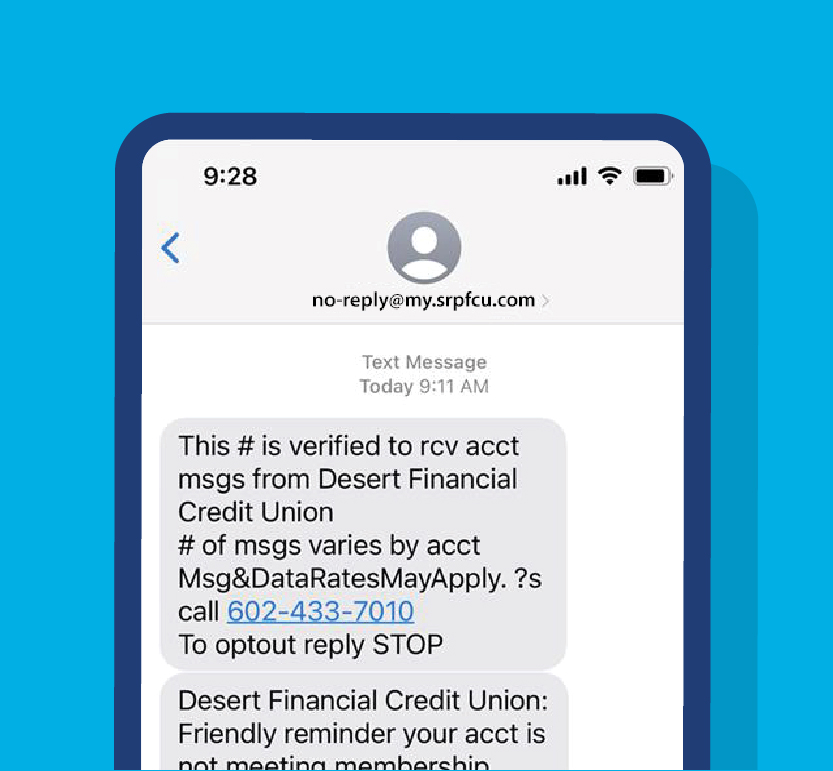
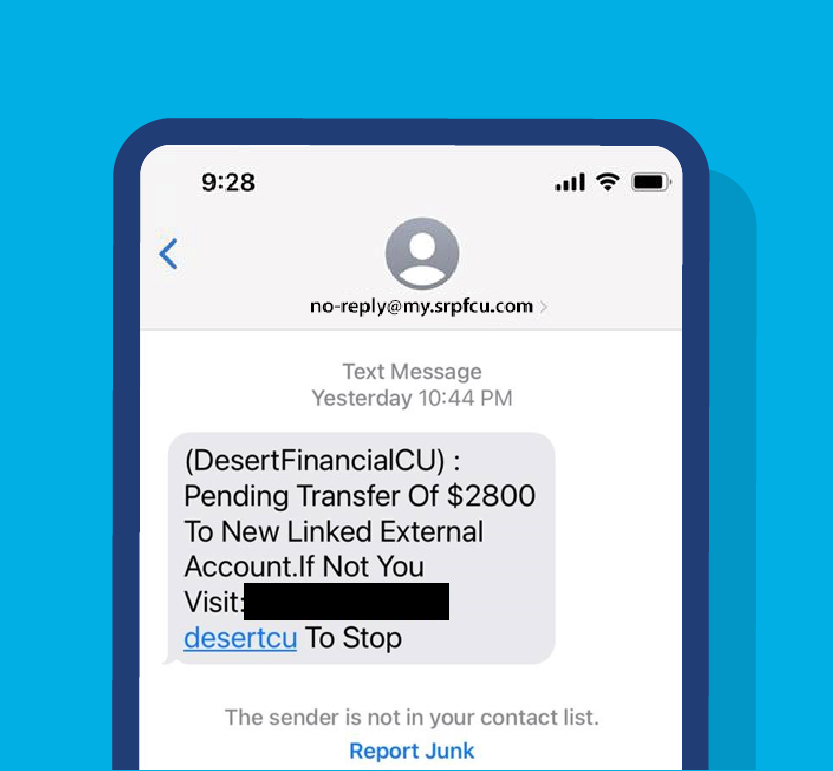
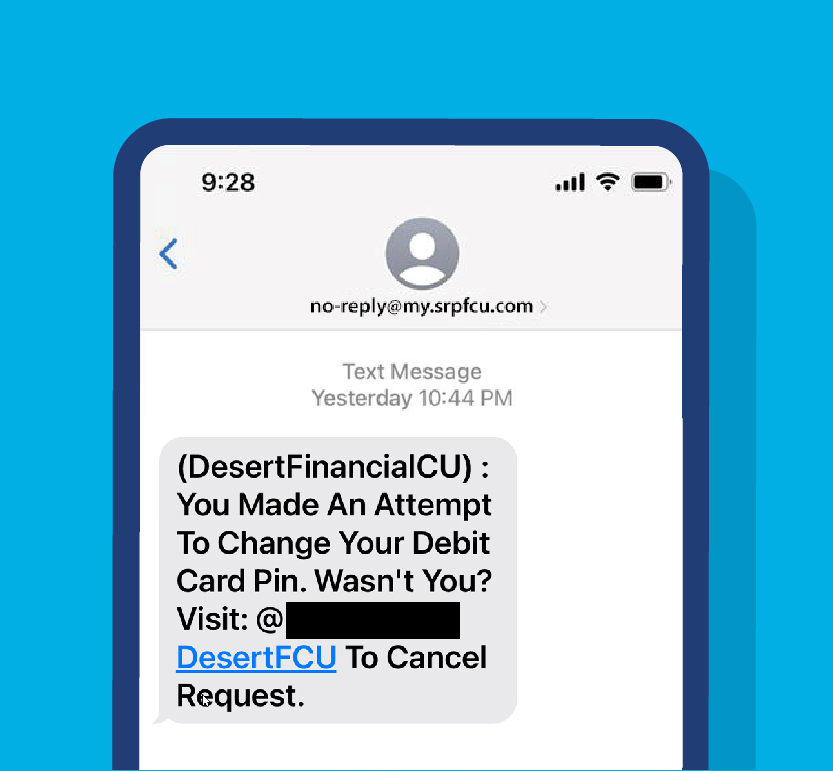
Here are examples of phishing texts that look like they are from us.

These are scams and were not sent by Desert Financial.

What can you do to protect your online identity?

While you may be able to get your money back in the event of fraudulent transactions on your account, many financial institutions will not reimburse the transactions if you knowingly give your financial information to a scammer.

  • Visit our site directly or use our mobile app. Be wary of suspicious links or emails.
  • Create unique digital passwords for important sites and do not enter them into unknown sites.
  • Enable mandatory multi-factor authentication on important accounts using one-time numeric PIN codes. Protect these codes and do not provide them to anyone.
  • Enable automatic software updates and security patches on all devices including cable modems and home Wi-Fi routers.

Looking for more ways to stay safe? Attend a webinar!

Our fraud team helps members identify, shut down and overcome fraud every single day. They know which scams are trending, and they know which signs to look for. You can learn how to spot attempted fraud in your daily life with their tips and tricks by attending one of our upcoming webinars. Just register below and start learning how you can protect your hard-earned money. (Check back soon for more information.)
Fraud FAQs

How can I protect myself from becoming a victim of fraud or identity theft?

  • Use strong, unique passwords for each of your accounts.
  • Enable multi-factor authentication where possible.
  • Be cautious of unsolicited emails, calls or text messages asking for personal information.
  • Regularly monitor your bank and credit card statements for unauthorized transactions.
  • Shred documents containing personal information before disposing of them.

As a reminder, Desert Financial will never call you and ask for your account credentials. Do NOT give account credentials to anyone.

What steps should I take if I receive a phishing email or message about my Desert Financial account?

  • Do not click on any links or download attachments.
  • Do not respond to the message.
  • Report the phishing attempt to us by calling (602) 433-7000.
  • Send a copy to us at emailfraud@desertfinancial.com

What should I do if I've become a victim of fraud or identity theft?

Fraud tips worth hearing

You can never be too prepared. Watch these videos to find more ways to fight fraud.

Related content

Connect with us

outline of a business

Visit a branch

Find locations

By clicking Continue you will leave the Desert Financial website and will be directed to an external website operated by a third party.


Desert Financial does not endorse and is not responsible for the content, links, accessibility, or security of any external website. The privacy and security policies of Desert Financial do not apply to the linked website. We encourage you to review these policies upon visiting the linked site to see how they apply to you.